

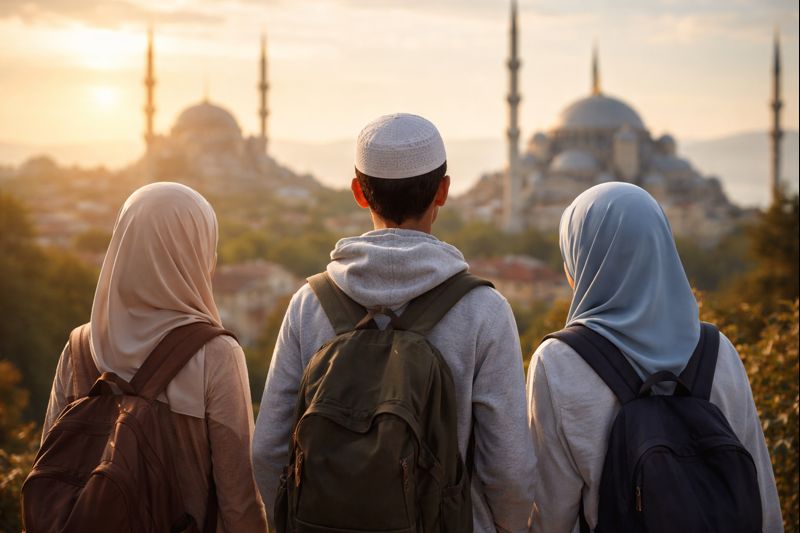
Educating Muslim Youth About the Potential of the Muslim Ummah
When we observe the situation of the Muslim Ummah today, we see many challenges: poverty, disunity, occupation, and an intellectual gap compared to the Western world. The legacy of colonialism and the occupation of Muslim lands has led to the fragmentation of the Muslim world. Since the abolishment of the Caliphate in 1924, Muslim-majority governments have experimented with Western models of governance—democracy and dictatorship alike—yet these efforts have only contributed to further decline.
Despite these challenges, it’s crucial that we recognize and teach our children about the tremendous potential and strengths that exist within the Muslim Ummah.
The Strengths of the Muslim Ummah
The Muslim world possesses significant strengths that, when properly harnessed, can lead to remarkable progress:
- Islamic Ideology: A comprehensive system of belief and practice that offers guidance for all aspects of life
- A Young and Vibrant Population: Millions of energetic, capable youth ready to contribute
- Abundant Resources: Natural resources that can fuel development and prosperity
- Significant Wealth: Economic potential that remains largely untapped
- Strong Military Capability: Defense capabilities across Muslim nations
- Vast Land Mass: Strategic geographic positioning across multiple continents
Why These Strengths Remain Untapped
These strengths currently exist within the Muslim Ummah, yet they have not benefited our communities as they should. The primary reason? The current secular and nationalist structure of the Muslim world. Governments often do not govern in the interest of Islam or the Muslim Ummah as a whole, leaving our collective strengths underutilized.
“The Muslim Ummah needs new leadership that will govern by Islam and unify and protect the believers.”
A sincere Islamic leadership, governing according to Islamic principles, would harness the resources and strengths of the Muslim Ummah for the benefit of Islam and the entire community. United under the banner of Islam, the Muslim Ummah can once again become a beacon of hope for the poor and oppressed, and a leader among nations.
Our Role as Parents: Challenging False Narratives
As parents, we carry an important responsibility: to educate our youth about the strength, potential, and capability of the Muslim Ummah united under Islam.
The media has largely portrayed a negative image of the Muslim world, and this has deeply affected how our youth think and view their own heritage. We must actively challenge these false narratives and help our children develop a positive, realistic understanding of the Muslim world’s potential.
Why This Matters
When our youth have a positive view of the Muslim world, they become:
- More motivated to support the revival of Islam
- Inspired to contribute toward the development of Muslim communities
- Confident ambassadors of Islam
- Active participants in positive change
A Vision for Our Youth
Our vision should be clear: we want our youth to become proud ambassadors of Islam who strive for its revival and work toward the betterment of the Muslim Ummah.
The Prophet ﷺ reminded us of the importance of righteous youth:
“There are seven types of people whom Allāh will give protection with His Shade on a Day when there will be no shade except His Shade: (1) A just ruler; (2) a young person who grew up with the worship of Allāh; (3) a person whose heart is attached to the mosque; (4) two persons who love, meet and depart from each other for the sake of Allāh; (5) a man whom a beautiful and high ranking woman seduces, but he rejects this offer by saying: ‘I fear Allāh’; (6) a person who gives a charity and conceals it to such an extent that the left hand might not know what the right has given; (7) and a person who remembers Allāh in privacy and his eyes weep.” (Narrated by Al-Bukhari and Muslim, on the authority of Abu Huraira)
Actions We Can Start Today
Dear parents, the time to act is now. Here’s how you can begin:
1. Have open conversations with your children about the rich history and potential of the Muslim Ummah
2. Counter negative media narratives by providing balanced, truthful information about the Muslim world
3. Encourage Islamic identity by helping your children take pride in their faith and heritage
4. Inspire action by showing them how they can contribute to positive change in their communities
5. Model dedication by demonstrating your own commitment to Islamic principles and the betterment of the Ummah
Let us encourage our youth to proudly practice and propagate the Deen. The future of the Muslim Ummah depends on the generation we raise today. May Allah ﷻ guide us in raising righteous children who will be among those who revive Islam and serve humanity.

Related Articles
Allah is tayyib and accepts only what is tayyib
I ASKED THE children about what they thought of the hadith where the Prophet ﷺ said: ‘O people! Indeed Allah is tayyib and He does not accept but what is tayyib…’ (Muslim) ‘Could it mean that Allah only accepts what is purely for Him?’ my daughter said. ‘Perhaps it means that every step of what […]
Hearts without bitterness
JANNAH IS NOT a place of any resentment, bitterness, or jealousy. Indeed, one cannot enjoy its bliss with such feelings buried deep in the heart. You cannot be in Jannah with your believing brothers and have memories that surface of some words or actions they did to you (knowingly or unknowingly) making you resent them. […]

KEEPING THINGS SIMPLE
In current times, when the use of technology is rife and the average person’s use of social media is 4-5 hours, our day to day life has lost focus and become complicated and overwhelming. When processes and systems have become more efficient than has ever been in the past in order to make life more […]